
Foot and Ankle Surgeon Melbourne: Dr Adrian Talia Teaches Advanced Reconstruction Techniques in Sydney
Orthopaedic surgery continues to evolve rapidly, particularly in the field of foot and ankle surgery. New surgical technologies, improved fixation methods, and advanced ligament reconstruction techniques are constantly improving outcomes for patients with complex injuries.
Recently, (November 2025) Melbourne orthopaedic surgeon Dr Adrian Talia travelled to Sydney to participate as faculty in a specialist training program for orthopaedic surgeons. The course, titled “Foundations for Foot and Ankle Surgery,”focused on modern techniques in foot and ankle injury reconstruction and was attended by eight senior orthopaedic registrars and foot & ankle surgery fellows from across Australia.
The program was facilitated by Arthrex, a global leader in orthopaedic surgical technology. Dr Talia taught alongside Sydney orthopaedic surgeon Dr Michael Symes, delivering lectures and hands-on surgical training designed to improve surgeons’ skills in treating complex foot and ankle injuries.
This type of specialised training helps ensure that patients receive the most up-to-date care when undergoing foot and ankle surgery in Australia.
Advanced Foot and Ankle Surgery Education
The Foundations for Foot and Ankle Surgery course was designed as an intensive educational program combining didactic lectures with cadaveric surgical training.
Dr Adrian Talia delivered a series of lectures covering several important areas of modern foot and ankle reconstruction, focusing on current evidence, surgical planning, and operative techniques.
Following the lecture sessions, participants attended two cadaveric surgical laboratories, where they practised these procedures under the supervision of experienced faculty.
Cadaver-based surgical training is widely regarded as one of the most effective ways for orthopaedic surgeons to develop technical skills in foot and ankle surgery, allowing trainees to perform procedures in a realistic setting before applying them in the operating theatre.
Syndesmosis Reconstruction for Ankle Injuries
One of the key topics taught during the course was syndesmosis reconstruction, a procedure used to treat injuries to the ligaments that stabilise the joint between the tibia and fibula above the ankle.
Syndesmosis injuries often occur in high ankle sprains or ankle fractures and can lead to long-term ankle instability if not properly treated.
During the teaching sessions, Dr Talia demonstrated modern fixation techniques that restore the natural alignment and function of the ankle joint while allowing controlled physiological movement.
For orthopaedic trainees, understanding the biomechanics of syndesmotic injuries and learning the latest reconstruction techniques is essential for achieving optimal patient outcomes.
Nano Needle Arthroscopy in Foot and Ankle Surgery
Another important area covered in the course was nano needle arthroscopy, an emerging technology that is transforming minimally invasive foot and ankle surgery.
Traditional arthroscopy already allows surgeons to treat many ankle conditions through small keyhole incisions. Nano arthroscopy takes this concept further by using extremely small cameras and instruments, reducing surgical trauma to surrounding tissues.
Dr Talia’s lecture explored the potential applications of this technology in diagnosing and treating ankle joint conditions, as well as its role in improving recovery times for patients.
As minimally invasive techniques continue to develop, training surgeons in these technologies is becoming increasingly important.
Fibulock Fixation for Ankle Fractures
The treatment of ankle fractures was another major focus of the training program.
Participants learned about the Fibulock intramedullary fixation system, which allows surgeons to stabilise fractures of the fibula using a minimally invasive technique.
Traditional fixation methods often involve plates and screws attached to the outer surface of the bone. In contrast, intramedullary fixation places the implant within the bone canal.
This technique may reduce soft tissue disruption and potentially lower the risk of wound complications, making it an important development in modern ankle fracture surgery.
Delegates practised the procedure during the cadaveric sessions, gaining hands-on experience with implant placement and fracture stabilisation.
Lateral Ligament Reconstruction for Chronic Ankle Instability
Chronic ankle instability is a common problem that can develop after repeated ankle sprains.
When physiotherapy and rehabilitation are not sufficient, lateral ligament reconstruction surgery may be required to restore ankle stability.
During the course, Dr Talia taught modern reconstruction techniques that incorporate ligament augmentation, providing additional strength to the repair.
These techniques utilise advanced suture constructs to reinforce the reconstructed ligament while the body’s natural healing process occurs.
For surgeons treating athletes and active individuals, mastering these techniques is an important part of modern ankle ligament surgery.
Deltoid Ligament Reconstruction with Internal Brace Augmentation
The course also covered reconstruction of the deltoid ligament, the major stabilising structure on the inner side of the ankle.
Deltoid ligament injuries can occur alongside ankle fractures or severe ankle sprains and may contribute to persistent instability if untreated.
Dr Talia demonstrated deltoid ligament reconstruction techniques using internal brace augmentation, which provides additional support to the repaired ligament.
Internal brace technology uses strong suture-based constructs that help protect the repair during early healing while maintaining natural joint motion.
This technique is becoming increasingly recognised as an important advancement in ankle ligament reconstruction surgery.
Lisfranc Ligament Injury Stabilisation
Another key focus of the course was the management of Lisfranc injuries, which involve damage to the ligaments stabilising the midfoot.
Lisfranc injuries are relatively uncommon but can have significant long-term consequences if not treated correctly.
During the teaching sessions, Dr Talia demonstrated modern surgical techniques for Lisfranc ligament stabilisation, including the use of:
Dorsal plating techniques
Internal brace ligament augmentation
These approaches aim to restore normal alignment of the midfoot and maintain long-term joint stability.
For orthopaedic trainees, understanding the diagnosis and management of Lisfranc injuries is essential in the field of foot and ankle trauma.
Hands-On Cadaveric Foot and Ankle Surgical Training
A highlight of the course was the opportunity for trainees to participate in two supervised cadaveric surgical sessions.
These practical sessions allowed the eight attending registrars and fellows to practise each procedure step-by-step under expert guidance.
Cadaveric training offers several benefits for surgeons learning advanced foot and ankle surgery techniques, including:
Realistic anatomical experience
Safe practice of complex procedures
Immediate feedback from experienced faculty
Familiarity with modern surgical implants and instrumentation
Dr Adrian Talia and Dr Michael Symes worked closely with the trainees throughout the sessions, ensuring each participant developed confidence in performing the procedures.
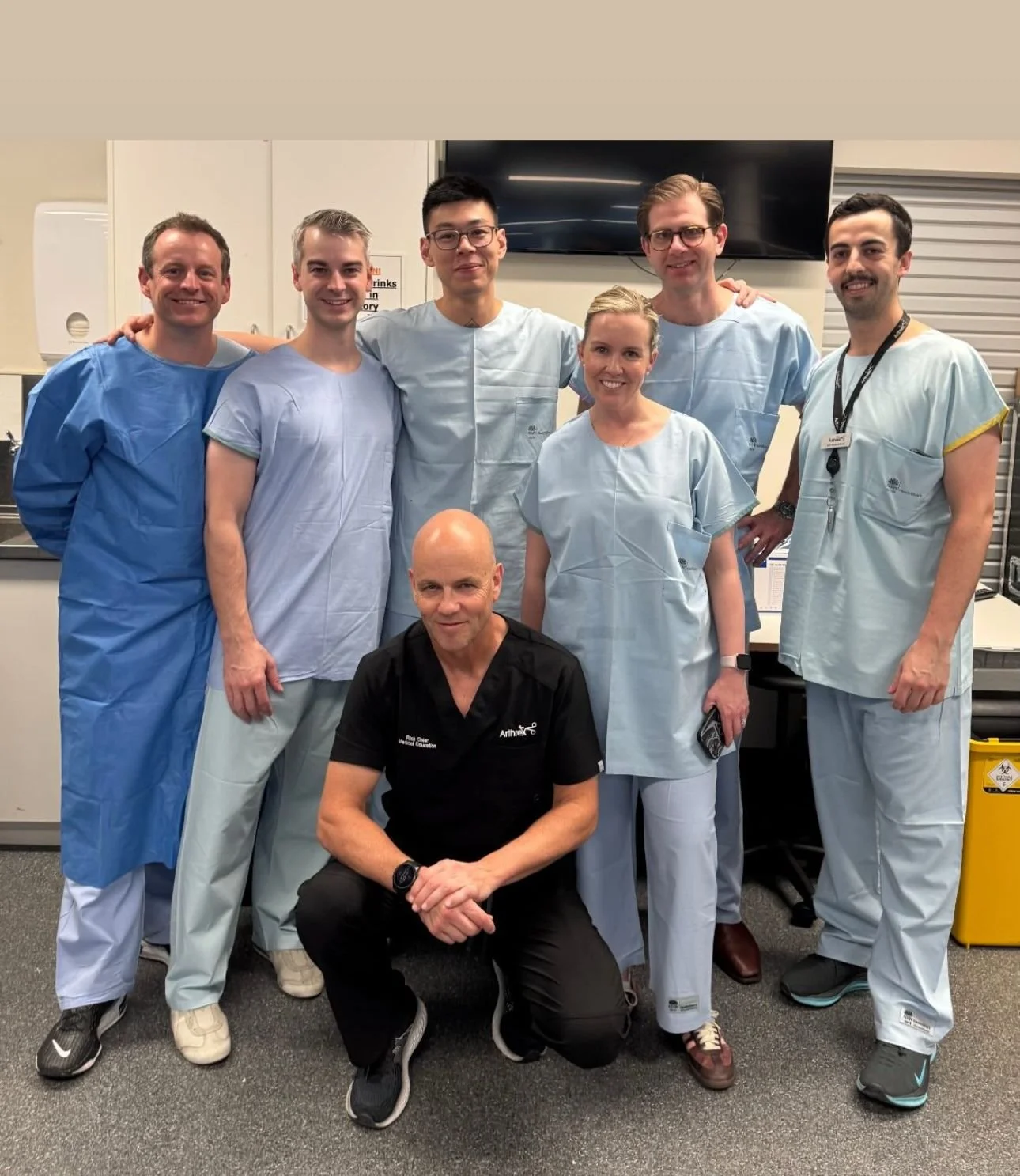
Cadaver training for syndesmosis reconstruction foot and ankle surgery course - Participants from Victoria
Dr Adrian Talia’s Commitment to Orthopaedic Education
In addition to treating patients in Melbourne, Dr Adrian Talia is actively involved in orthopaedic surgical education and training.
Teaching courses such as Foundations for Foot and Ankle Surgery helps ensure that future orthopaedic surgeons are trained in the latest evidence-based techniques.
By sharing surgical knowledge and practical experience, faculty members help improve the standard of care for patients with foot and ankle injuries across Australia.
Leading Advances in Foot and Ankle Surgery
Foot and ankle surgery is a rapidly evolving field, with ongoing advancements in:
Modern fracture fixation techniques
Ligament reconstruction procedures
Educational programs like this allow surgeons to remain at the forefront of these developments.
Dr Adrian Talia looks forward to continuing his involvement in orthopaedic education, foot and ankle research, and surgical training, helping advance the treatment of foot and ankle injuries in Australia.