
Melbourne-based orthopaedic foot and ankle surgeon Adrian Talia was invited to present at a specialist teaching program for orthopaedic registrars on the Gold Coast in September 2025. The educational event was organised by the Queensland Orthopaedic Registrars Association and brought together orthopaedic trainees from across Queensland, along with current foot and ankle surgery fellows.
The registrar teaching meeting focused on modern approaches to diagnosing and managing syndesmosis injuries of the ankle, with particular emphasis on surgical reconstruction techniques. Syndesmosis injuries, often referred to as high ankle sprains, are a complex form of ankle injury that can significantly affect ankle stability and long-term joint function if not appropriately treated.
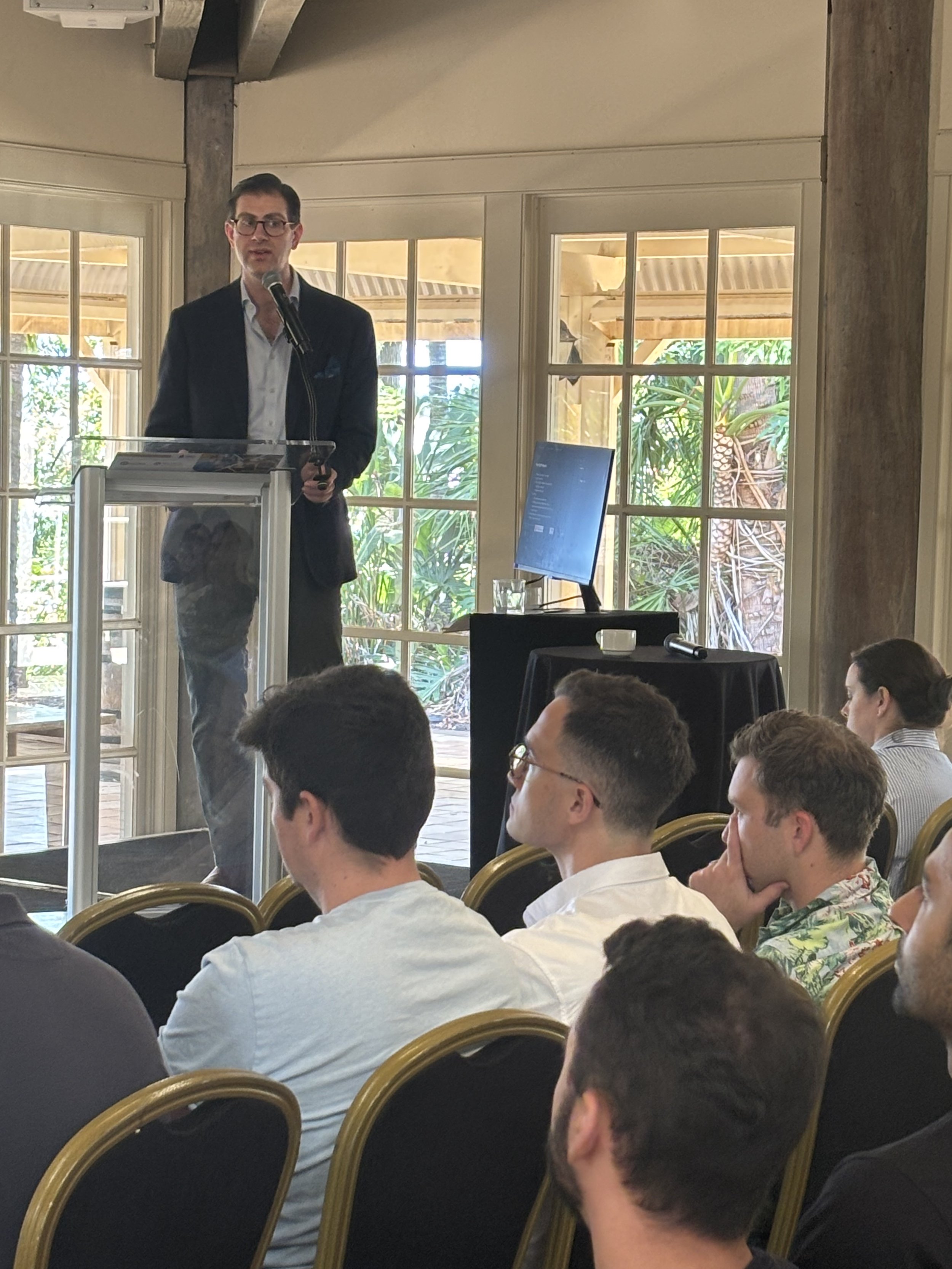
Education on Syndesmosis Injuries and the AITFL
During the meeting, Dr Talia delivered a series of lectures covering the anatomy, diagnosis, and surgical management of syndesmosis injuries. Particular attention was given to the anterior inferior tibiofibular ligament (AITFL), a critical stabilising ligament of the distal tibiofibular joint.
Injuries involving the AITFL commonly occur in sporting trauma or alongside ankle fractures. When the syndesmosis becomes unstable, surgical reconstruction may be required to restore normal ankle mechanics and prevent long-term complications such as chronic pain, instability, or early ankle arthritis.
Dr Talia’s presentations discussed:
The anatomy and biomechanics of the ankle syndesmosis
The role of the AITFL in maintaining ankle stability
Modern imaging and diagnosis of syndesmotic injuries
Indications for syndesmosis reconstruction surgery
Contemporary surgical techniques used in foot and ankle surgery
The outcomes of poorly or non-treated syndesmosis injuries - such as ankle arthritis
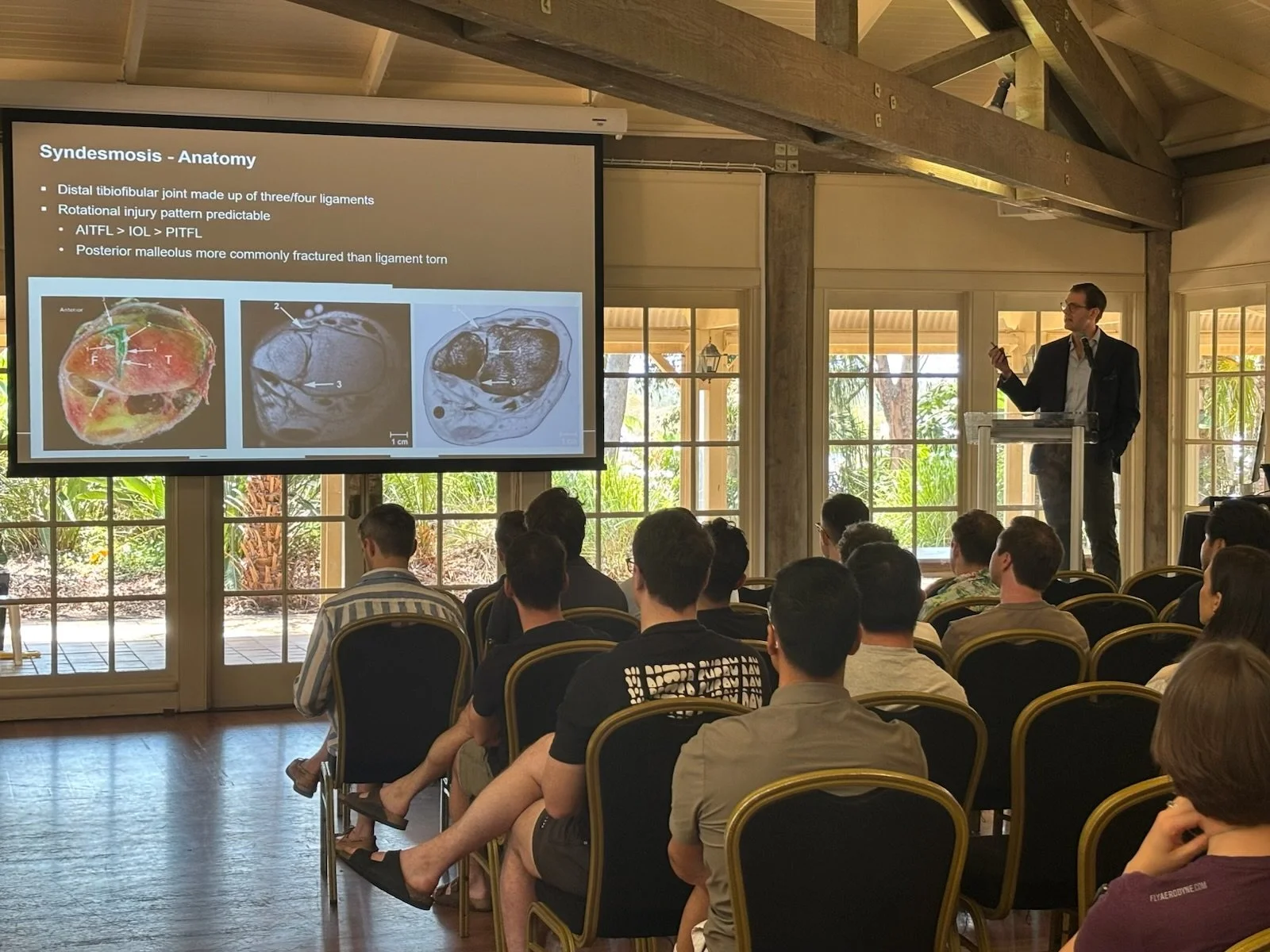
Demonstration of the syndesmosis anatomy and biomechanics
Orthopaedic registrars learning syndesmosis reconstruction techniques at QUORA meeting
These sessions provided orthopaedic registrars with an updated overview of current evidence-based approaches to treating syndesmosis injuries.
Hands-On Workshop in Syndesmosis Reconstruction
A key component of the teaching program was a practical surgical skills workshop, where Dr Talia supervised a hands-on session using anatomical sawbone models.
During the workshop, participants were guided through the key steps involved in performing syndesmosis ligament reconstruction, allowing trainees to practice the techniques in a controlled environment before applying them in clinical practice.
Hands-on training sessions are an essential part of orthopaedic education, enabling trainees to develop familiarity with surgical instrumentation, understand the anatomy in three dimensions, and refine their operative technique.
Throughout the workshop, Dr Talia worked closely with registrars and fellows to demonstrate surgical principles including accurate anatomical reconstruction, fixation strategies, and methods used to restore stability to the ankle joint.
Supporting Orthopaedic Registrar Education
Events organised by the Queensland Orthopaedic Registrars Association play an important role in the ongoing education of orthopaedic trainees in Australia. By bringing together registrars from across Queensland, these meetings provide valuable opportunities for learning, discussion, and collaboration.
Dr Talia’s participation reflects his ongoing commitment to orthopaedic education, surgical training, and advancing foot and ankle surgery techniques. Teaching opportunities such as this allow experienced surgeons to share practical knowledge and help develop the next generation of orthopaedic specialists.
Advancing Foot and Ankle Surgery Education
Syndesmosis injuries continue to be an area of active research and innovation in foot and ankle surgery. Improving surgical reconstruction techniques and understanding ligament biomechanics are key to optimising outcomes for patients with complex ankle injuries.
By participating in registrar teaching programs and surgical workshops across Australia, Dr Talia remains actively involved in sharing knowledge and promoting best practice in the management of ankle injuries and syndesmosis reconstruction.
Educational events such as the QUORA meeting highlight the importance of ongoing training and collaboration in orthopaedic surgery, ensuring that patients benefit from the most up-to-date techniques and evidence-based care.