
AOFAS & IFFAS 2026: Representing Melbourne Orthopaedic Group on the World Stage in Seattle, USA
From 16 to 19 September 2026, the world's leading foot and ankle surgeons gathered in Seattle, Washington, for the AOFAS Annual Meeting and the IFFAS 9th Biennial Meeting — a landmark combined event uniting the American Orthopaedic Foot & Ankle Society (AOFAS) with the International Federation of Foot & Ankle Societies (IFFAS). Held at the Seattle Convention Center, the meeting brought together approximately 1,200 orthopaedic foot and ankle surgeons, researchers and allied health professionals from around the world for four days of scientific sessions, technique workshops and clinical debate. I had the privilege of attending as both a delegate and a presenter, representing Melbourne Orthopaedic Group (MOG) alongside my colleague David Shepherd. It was an outstanding opportunity to present recent work, learn from international leaders in the field, and reconnect with colleagues from across the globe — all while flying the flag for Australian foot and ankle surgery on the world stage.
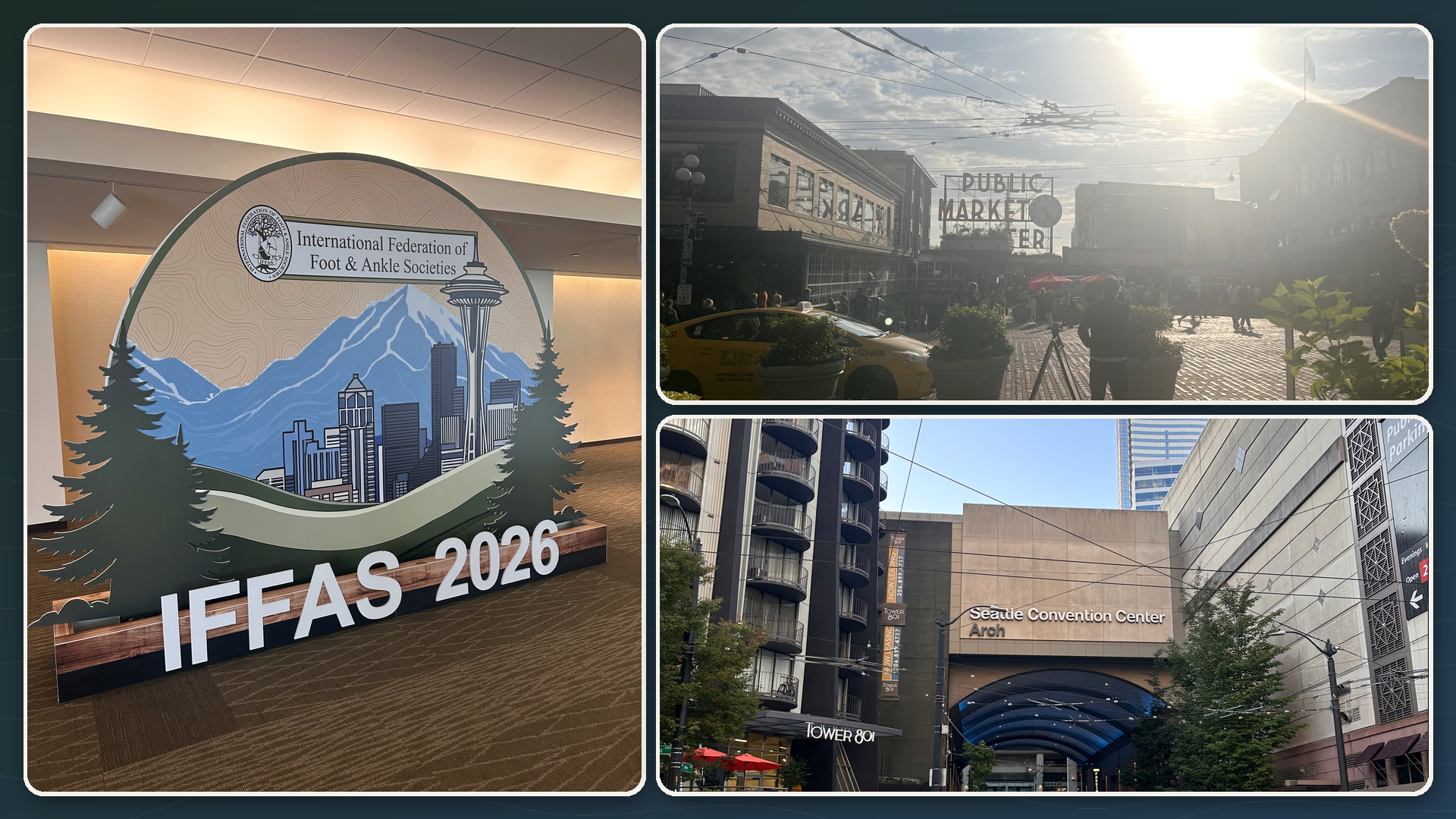
A truly international meeting
The AOFAS Annual Meeting is the largest gathering of orthopaedic foot and ankle surgeons in the world, and 2026 marked a special year with the IFFAS 9th Biennial Meeting running alongside it. Bringing these two organisations together under one roof meant an even broader mix of international faculty, research and clinical perspectives than usual, spanning trauma, sports injury, total ankle replacement, deformity correction and paediatric foot and ankle surgery. For patients, meetings like this matter more than they might realise. The techniques, implants and rehabilitation protocols discussed in these sessions filter directly through to clinical practice at home — it's how surgeons stay current with the evidence, learn from each other's outcomes, and refine the way we manage everything from a straightforward ankle fracture to complex chronic ligament instability.
Presenting on chronic syndesmosis injuries
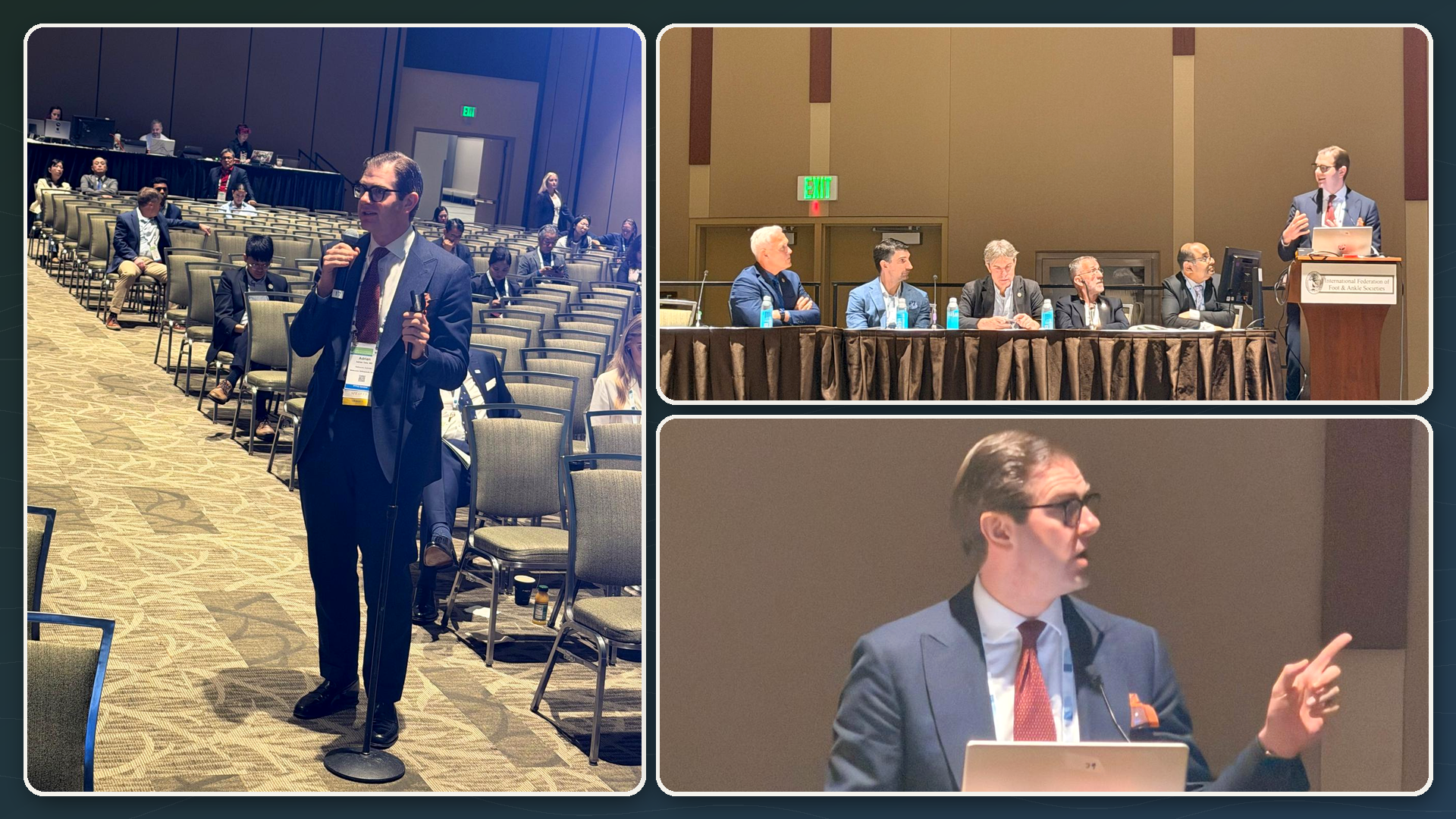
A highlight of the meeting for me was presenting on chronic syndesmosis injuries — an area of foot and ankle surgery I have a particular interest in, both clinically and through ongoing research. The syndesmosis is the strong ligament complex that binds the tibia and fibula together just above the ankle joint. It is commonly injured alongside a "high ankle sprain" in athletes and in more significant ankle fractures, and when it isn't recognised and treated appropriately at the time of the original injury, it can go on to cause persistent pain, a sensation of instability, and early wear of the ankle joint months or even years later.
Chronic syndesmosis injuries are notoriously difficult to diagnose and manage. Patients are often told their ankle "should be better by now", when in fact an unstable or malaligned syndesmosis is the underlying cause of their ongoing symptoms. My presentation covered how to recognise chronic instability, the imaging that helps confirm the diagnosis, and the surgical options available when reconstruction is required — including ligament reconstruction and revision fixation and fusion techniques for patients who have had a missed injury, or previous surgery that hasn't fully resolved their symptoms.
The presentation generated a genuinely engaged discussion, with thoughtful questions from colleagues managing similar cases in their own practices around the world. It was a strong reminder that chronic syndesmosis instability is a shared challenge across foot and ankle surgery internationally, and that there is real appetite among the international community for better diagnostic pathways and more predictable surgical solutions in this space. It was a real pleasure for me to stand on the podium alongside some worldwide giants of foot and ankle surgery and present as colleagues and equals. Kristian Buedts from Belgium, Stefan Rammelt from Germany, Mark Drakos from New York City USA, Bryan Den Hartog from Minnesota, USA and Alexandre Leme Godoy-Santos from Sao Paolo, Brazil. These are leaders in our field and for me to be treated as an equal alongside them was a humbling experience.
Strong Australian and Melbourne Orthopaedic Group representation
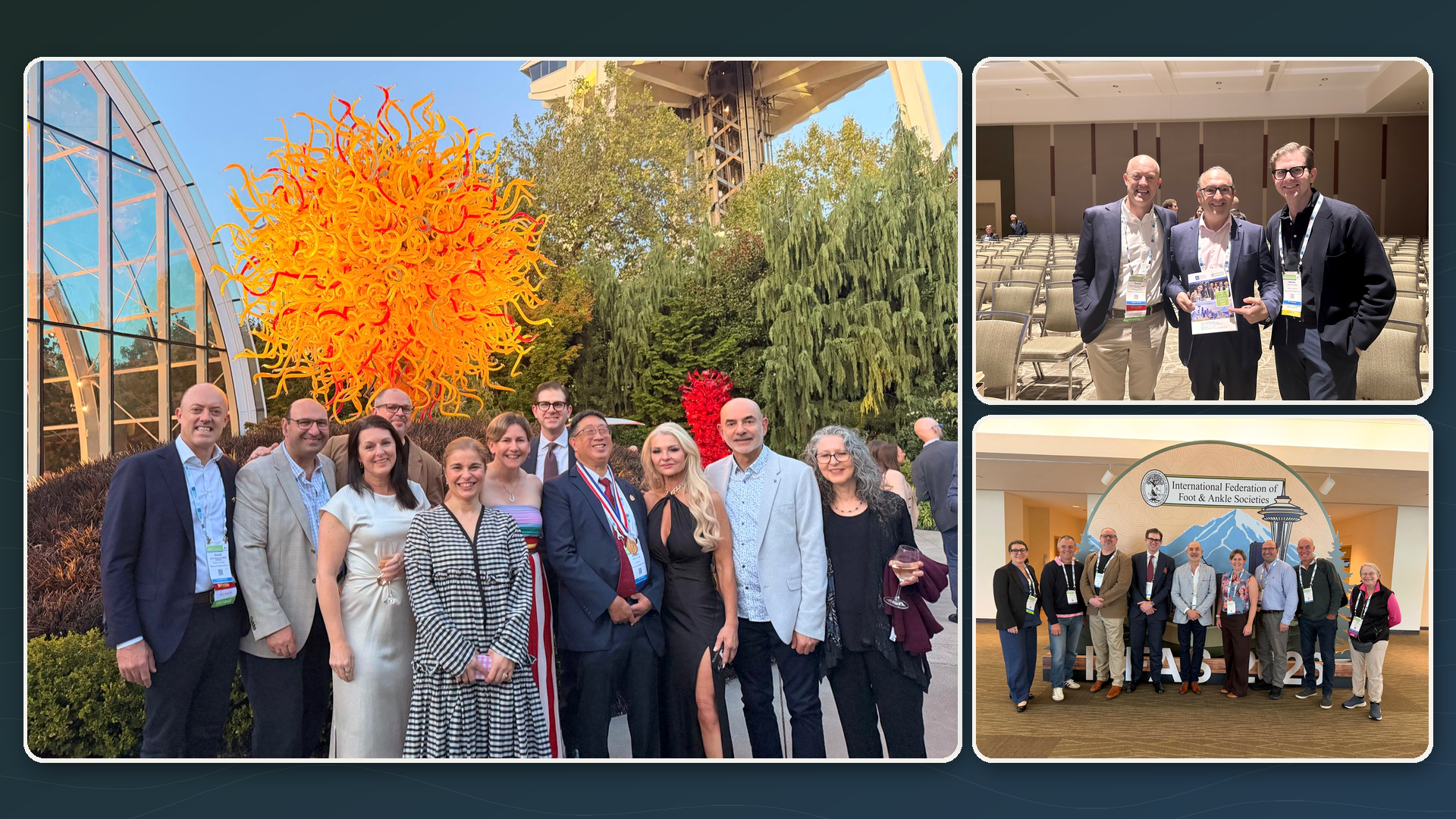
It was fantastic to see strong Australian representation at this year's meeting, and particularly pleasing to attend alongside my Melbourne Orthopaedic Group colleague and mentor David Shepherd, who also presented at the meeting on revision total ankle replacement. Having two MOG surgeons presenting work on the international stage reflects the calibre of foot and ankle surgery being practised — and researched — here in Melbourne, and the value MOG places on staying engaged with the global surgical community. Meetings like AOFAS/IFFAS are where Australian outcomes and techniques get tested against, and compared with, the very best in the world, and it was clear from the conversations in Seattle that Australian foot and ankle surgery continues to punch well above its weight. This follows on from strong Australian involvement at recent international meetings more broadly, and it's encouraging to see that presence continuing to grow year on year, with more Australian researchers and presenters finding their way onto the international program.
Why this matters for patients
It's fair to ask why a surgeon travelling to a conference on the other side of the world matters to a patient sitting in a Melbourne clinic. The honest answer is that it matters a great deal. Foot and ankle surgery is a relatively small, tightly connected sub-specialty within orthopaedics, and much of what changes clinical practice — a refined surgical technique, a better way of reading an MRI or weight-bearing CT for subtle instability, an emerging implant, or simply a different way of thinking through a difficult case — is shared first at meetings like this, well before it appears in a textbook. Attending, and presenting, keeps my own practice aligned with the best available evidence and the most current thinking from leaders in the field, which translates directly into how I assess, counsel and treat patients with complex ankle and syndesmosis problems back home. It also offers an opportunity for experts around the world to see the work that we are doing in Melbourne and offer their own critique and criticism with a different, international perspective.
Old friends, new connections
Beyond the formal sessions, one of the genuine pleasures of a meeting like this is the chance to catch up with old friends and mentors from previous fellowships and past conferences, and to make new connections with surgeons and researchers I hadn't met before. These relationships matter well beyond the conference itself. They underpin collaborative research, second-opinion discussions on complex cases, and the informal exchange of ideas that often leads to better outcomes for patients long after everyone has flown home. Surgery, and foot and ankle surgery in particular, is a relatively small and close-knit international community, and meetings like AOFAS/IFFAS are where those relationships are built and maintained. A particular mention goes out to one of my fellowship supervisors, Prof Victor Valderrabano from Basel Switzerland.and Dr Cesar de Cesar Netto from Duke University, Durham NC, USA who have both graciously hosted me at their practices in the past.
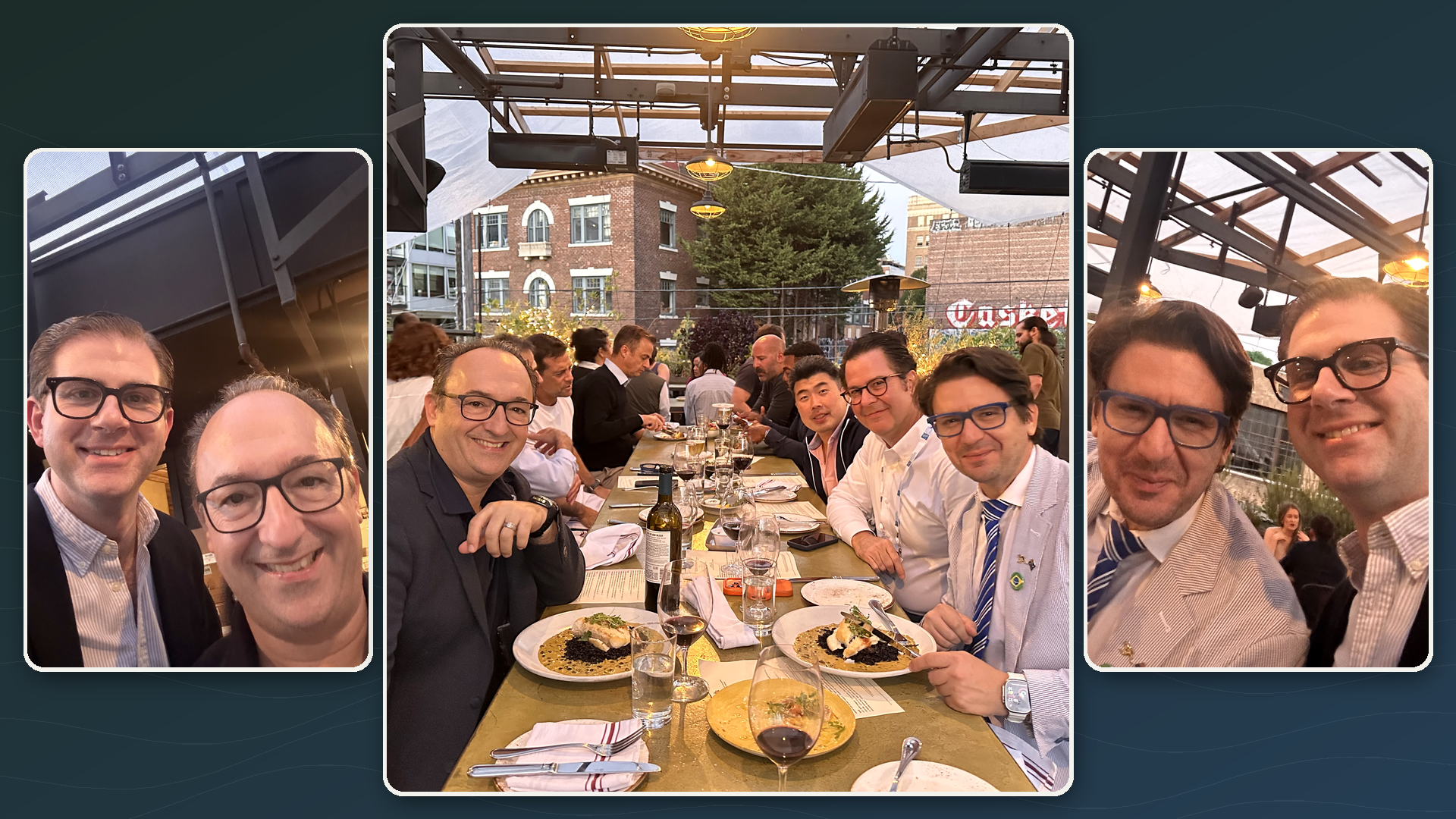
Prof Victor Valderrabano (Left), Dr Cesar de Cesar Netto (Right)
Looking ahead: IFFAS 2028 in Sydney
One of the most exciting outcomes of the week was the chance to help promote the next IFFAS meeting, which will be held in Sydney in 2028. Bringing the international foot and ankle community to Australia is a huge opportunity — both to showcase the quality of foot and ankle surgery and research being done here, and to give Australian and New Zealand surgeons, trainees and allied health colleagues the chance to attend a truly world-class meeting without the long-haul flight. Details on the IFFAS 2028 Sydney meeting are available now, and I'd encourage colleagues across the globe to save the date.
Final thoughts
AOFAS & IFFAS 2026 in Seattle was a genuinely valuable few days — a chance to present to a global audience for me on chronic syndesmosis injuries to an international audience, to represent Melbourne Orthopaedic Group and Australian foot and ankle surgery on the world stage, and to reconnect with the global community of surgeons who continue to shape how we treat these injuries. I'll be bringing what I learned in Seattle straight back into clinical practice here in Melbourne, for the benefit of my patients with complex foot pathology, ankle pathology and of course, syndesmosis injuries, and I'm already looking forward to welcoming the world to Sydney for IFFAS 2028.