
A bunion corrected through incisions a few millimetres long. An Achilles rupture repaired without opening the back of the heel. Minimally invasive surgery (MIS) is changing how we treat many common foot problems, and the skills behind it are learnt hands-on.
After the combined AOFAS Annual Meeting and IFFAS 9th Biennial Meeting in Seattle (read my recap here), I travelled to Arthrex's global headquarters in Naples, Florida, for the Foot and Ankle Minimally Invasive Surgery Course on 21 September 2026, followed by a bespoke cadaveric lab.
The headquarters in Floria is a sprawling campus, where research, education, innovation and device manufacturing occurs. This is really like Disneyland for Orthopaedic surgeons and it was a real treat to be able to experience this first hand.
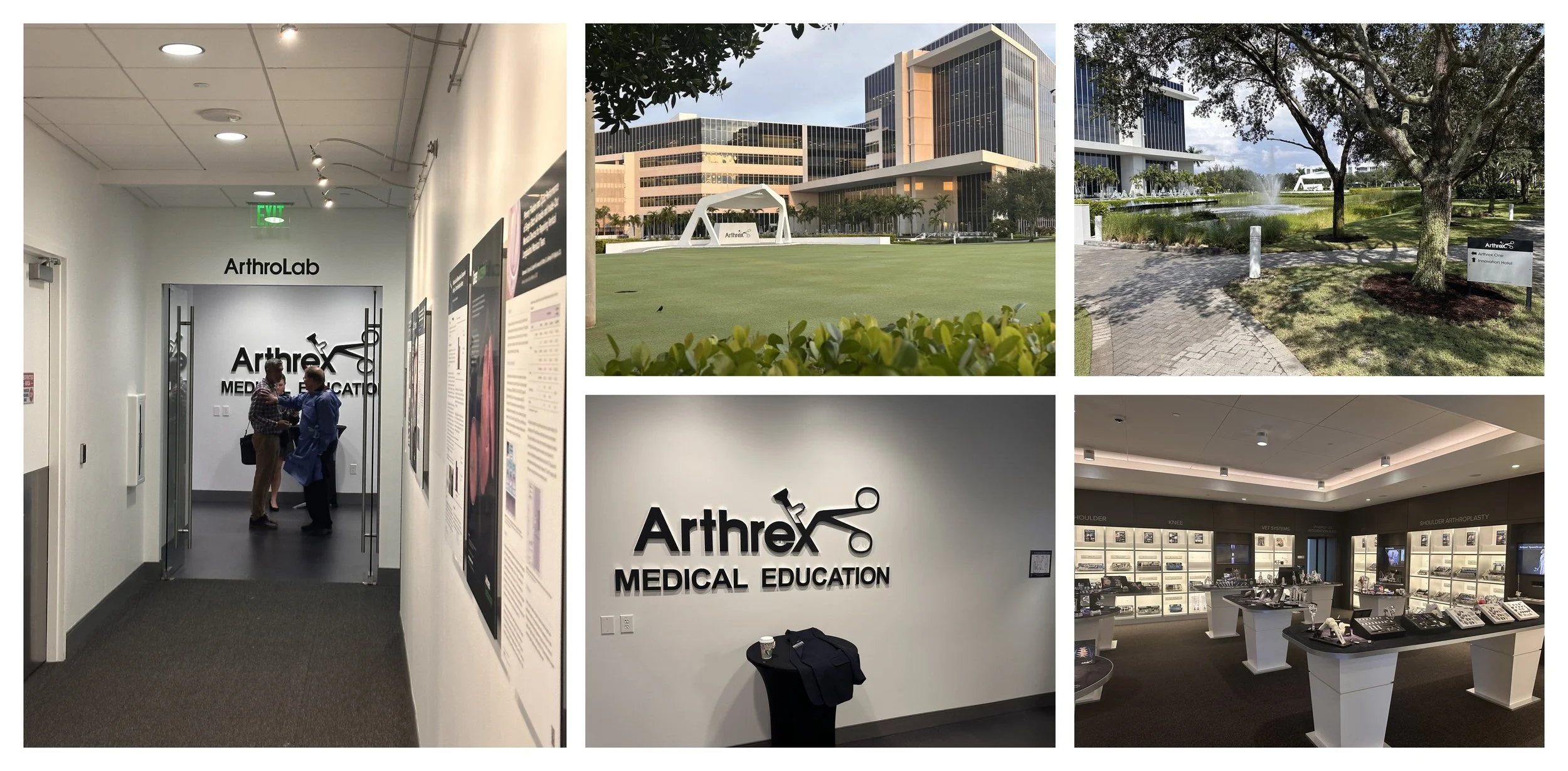
The arthrex campus in Naples, Florida USA
What is minimally invasive foot surgery?
Minimally invasive foot surgery — sometimes called keyhole or percutaneous surgery — uses small portals, a high-speed burr and live X-ray guidance (fluoroscopy) to cut and realign bone. Think of it as working through a letterbox rather than an open door: the soft tissues stay largely undisturbed while the correction remains precise.
For many people, that means smaller scars and a more comfortable early recovery. The critical thing to understand is that MIS is a technique, not a shortcut. The correction must match open surgery, and that demands specific training.
Inside the ArthroLab
Arthrex's Naples ArthroLab is a cadaveric skills laboratory where each station carries the same fluoroscopy and instruments used in theatre, so every technique is performed start to finish.
After a session on principles and case selection, the lab blocks covered:
• Hallux valgus (bunion) correction — typically a minimally invasive chevron and Akin osteotomy, realigning the first metatarsal and big toe through stab incisions.
• MIS Achilles repair — a percutaneous technique for acute ruptures, restoring tendon length and tension through small incisions.
• Cheilectomy — removing bone spurs from the big toe joint in hallux rigidus (big toe arthritis).
• Calcaneal osteotomy — shifting the heel bone to correct alignment or offload insertional Achilles tendinopathy.
• Lesser toe procedures — percutaneous osteotomies for hammer toes and forefoot pain (metatarsalgia).
A bespoke lab experience
After the course, Arthrex hosted a tailored lab focused on keyhole procedures I perform regularly:
• Arthroscopic lateral ligament reconstruction — rebuilding the outer ankle ligaments through small portals for chronic instability after repeated sprains.
• Arthroscopic medial ligament reconstruction — restoring the deltoid ligament on the inside of the ankle, which I have written about previously.
• Arthroscopic and MIS hindfoot fusions — joining arthritic joints such as the subtalar joint through small incisions.
Unhurried time to refine portal placement, fluoroscopy and fixation is invaluable. Small details — the angle of a burr pass, the position of a guide wire — determine the result.
The Innovation Hotel
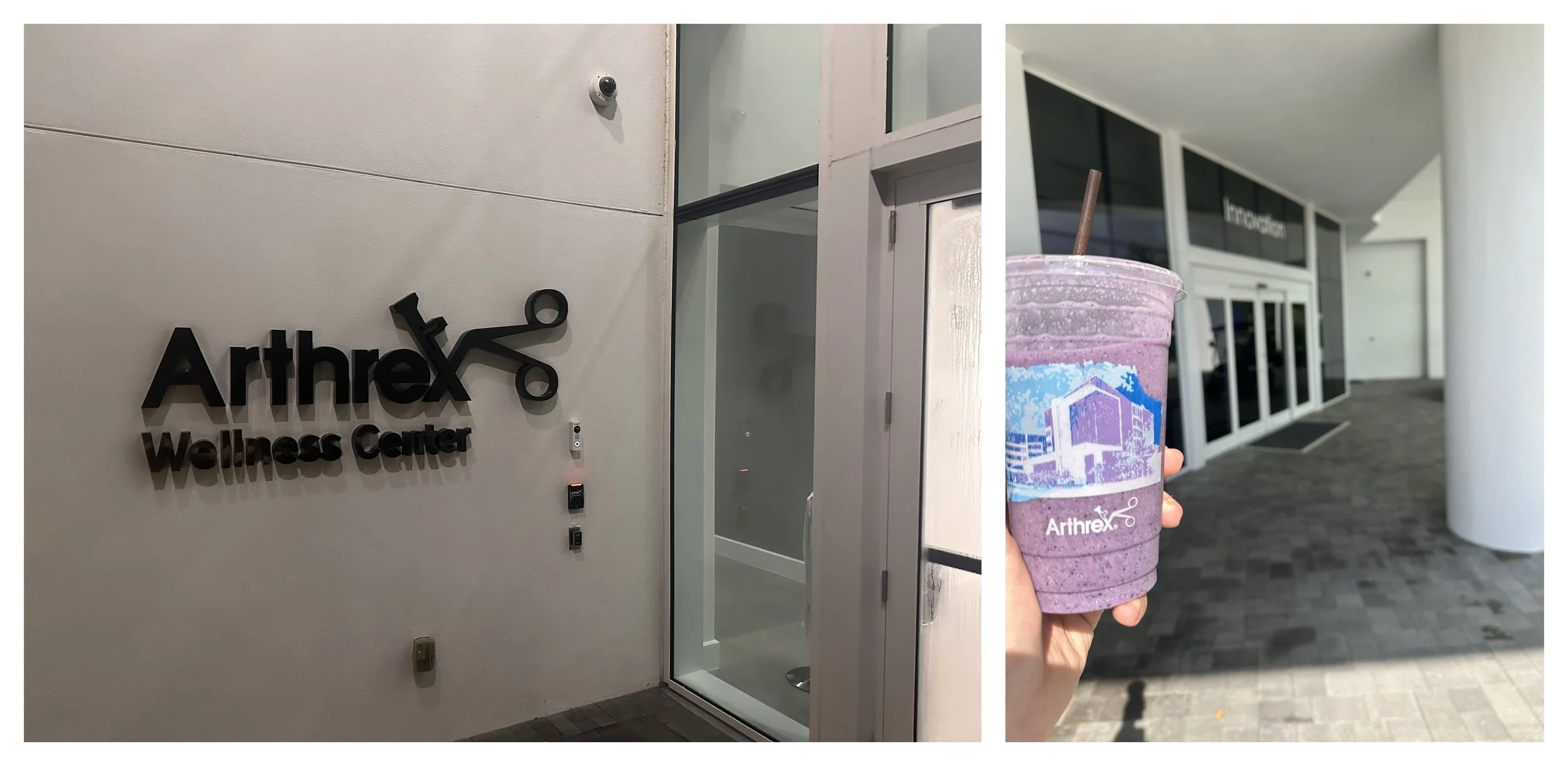
I stayed on campus at the Innovation Hotel, a short walk from the lab. It is an outstanding facility: 169 rooms designed around visiting surgeons, with dining, meeting spaces and access to the Arthrex Wellness Center, open to employees and guests.
Why partnering with industry matters
This course and lab were hosted by Arthrex. Collaboration between surgeons and industry is central to innovation in orthopaedics. Many of the instruments and implants I use exist because surgeons and engineers worked side by side on a clinical problem.
Industry brings engineering and training infrastructure no single hospital can match. Surgeons bring the clinical questions, the outcomes data and the judgement about what helps patients. Done transparently, that partnership gets proven techniques to patients sooner and more safely. My choice of procedure and implant is always driven by the evidence and by what is best for you.
What this means for my patients
Not every foot problem suits minimally invasive surgery. Severe deformity, advanced arthritis or poor bone quality often still need an open approach. I select the technique that gives the most reliable correction for each individual.
In active individuals — and certainly in competitive athletes — a smaller surgical footprint can mean a smoother return to training. Courses like this build on my fellowship training in Oxford and Basel and keep my techniques current for patients at Melbourne Orthopaedic Group.
Summary
• MIS uses small incisions, a burr and X-ray guidance to correct bone with less disruption to surrounding tissue.
• The course covered bunion, Achilles, big toe, heel and lesser toe surgery, plus a bespoke lab on arthroscopic ligament reconstruction and hindfoot fusion.
• Surgeon–industry collaboration drives innovation; technique and implant choices remain evidence-led.
• MIS is not right for everyone. I choose the approach case by case.
If you have a foot and ankle problem and would like to discuss your options, including minimally invasive surgery (which is appropriate for select patients). I would be happy to see you. Call my rooms on (03) 9124 7960 or email talia.admin@mog.com.au.